
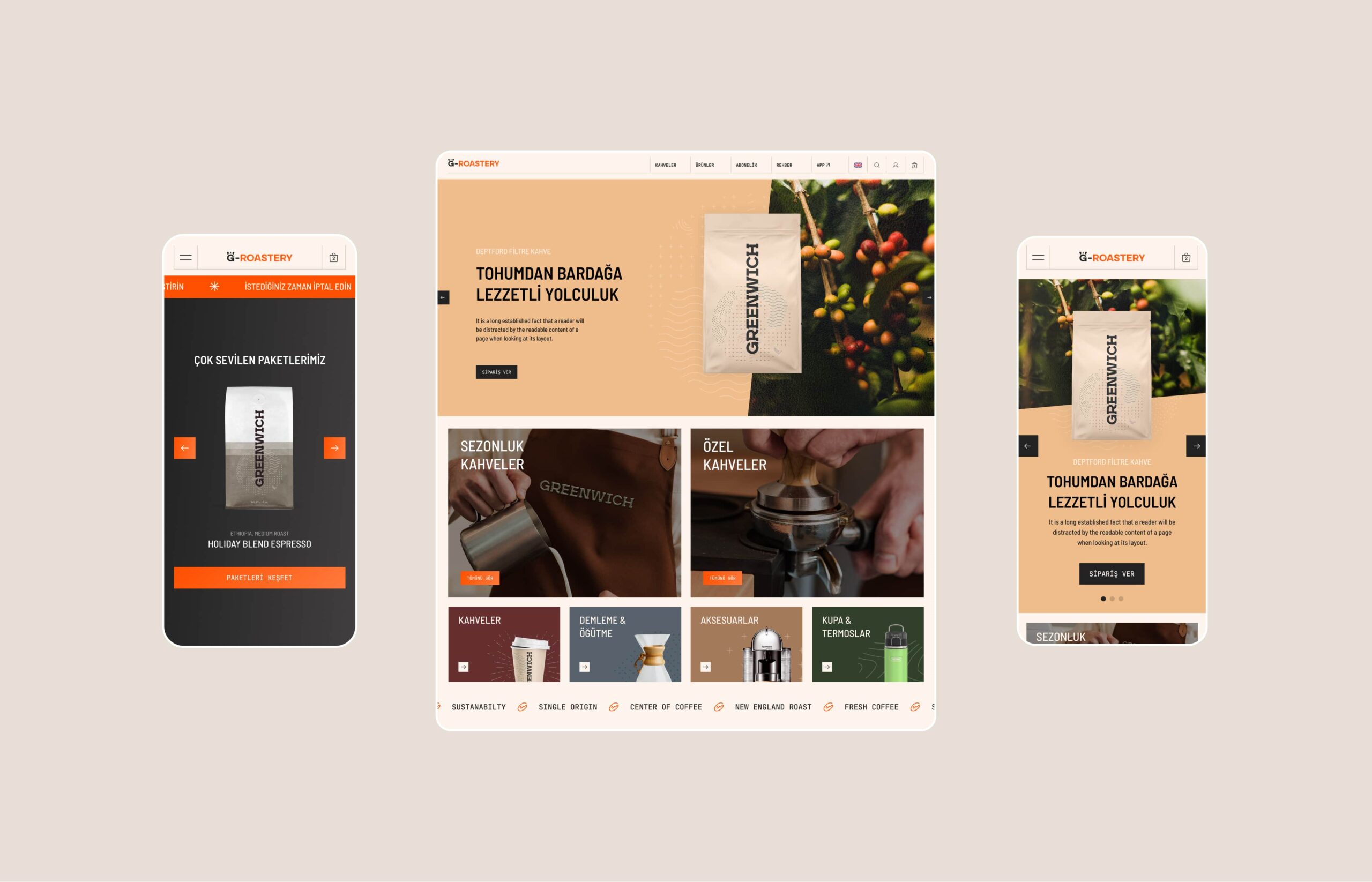
Greenwich Coffee
Mobile App Development, Front-End Development, Back-End Development
We use WordPress as a flexible content management platform, tailoring the experience to your business rather than relying on a prebuilt theme.
Businesses
We create a custom-designed website with content your team can manage.
Content Teams
We structure pages, news, products and custom content types for easier editing.
Online Stores
We plan products, orders, payments and integrations around your operations.
Agencies
We implement approved designs as custom themes, CMS structures and integrations.
We tailor WordPress to the project's content, performance and integration requirements.
We develop custom WordPress themes tailored to your brand, without relying on off-the-shelf themes.
We structure custom fields and reusable content modules for your editors.
We tailor the product catalog and shopping experience to the way your store operates.
We structure translated content and language-specific URLs using tools such as Polylang.
Where off-the-shelf plugins fall short, we build project-specific plugins and API endpoints.
We build speed, accessibility and crawlable page structure into the project from the design stage onwards.
We treat WordPress as a web platform shaped around your needs, not just a blogging tool. These are the needs we see most often; the scope of each project is defined separately.
The need A site that represents the brand accurately and is easy for the team to keep up to date.
We build brand-specific page templates and content fields your team can update themselves.
The need Product and brand content that reaches different markets with the same consistency.
We plan language-specific pages, content and URLs together with the translation workflow and language switching.
The need A store that brings content and sales together in one admin panel.
We build a WooCommerce store tailored to your product structure, promotion rules and operations.
The need Publishing news, blog posts, guides or resources in an organized way.
We set up a structured publishing platform with custom content types, categories and tags, editorial roles and archive pages.
The need Making certain content or actions available only to registered users.
We design registration, login, user roles and members-only content around the project's requirements.
The need Custom functionality that goes beyond a standard site and works with other systems.
We keep WordPress as the content manager and add business-specific functionality through custom plugins and API connections.
WordPress isn't the right technology for every project; if your needs call for a different approach, we'll say so during discovery.
Whether you can run the site yourselves depends on how the admin is set up. We design the editing experience around the content your team will actually work with.
We define only the fields each content type needs, so editors fill in clearly labeled fields instead of one generic text box.
Pages are built from blocks that follow the design system; editors can add and reorder blocks while the design stays consistent.
Lists such as team members, testimonials, FAQs or product features can be added and edited without creating separate pages.
We separate who can edit and publish which content, and keep critical settings behind administrator access.
On multilingual projects, tools such as Polylang let you manage each language from the same admin, with translations linked to each other.
Field instructions, sensible defaults and previews help your team handle everyday updates without developer support.
Set up properly, WordPress can work alongside the other systems your business relies on. We plan each integration around which way data needs to flow and how often.
Customer, product or order data passed between WordPress and your business systems according to defined rules.
Connections to CRMs such as Salesforce and other services with official APIs, where access and security requirements allow.
Contact and application form submissions delivered to the right system and person without manual copying.
Payment providers and shipping carriers connected to complete the order flow in WooCommerce stores.
Stock and pricing kept in line with ERP or marketplace systems at set intervals.
Data exposed in a controlled way for a mobile app, a separate front end or business partners.
Whether an integration is feasible depends on the other system's API, access permissions and security requirements. We define the scope together during discovery.
We define content types, user needs and integrations.
We plan custom interfaces, content structures and WordPress editing fields.
We build the theme, custom fields and required API connections.
We test the website across devices and review performance, content and technical SEO requirements.
We launch the website and define an appropriate maintenance scope for projects developed by Basework.
We treat performance and security as part of development, not as settings added after launch.
Page caching and less unnecessary code, using tools such as WP Rocket where they fit.
Static files served from locations close to visitors, with a basic protection layer.
Images delivered at the right size and format, with services such as ShortPixel where needed.
Real measurements before and after launch to find what to improve.
Limited administrator accounts and role-based permissions.
Core, theme and plugin updates applied with compatibility checks.
Regular backups and uptime monitoring.
Heading structure, redirects, sitemaps and meta fields prepared with tools such as Yoast SEO.
We don't promise a specific Lighthouse score, performance gain or ranking. Post-launch maintenance is available only for projects Basework has built, under a maintenance contract.
We choose tools to fit each project; these are examples of technologies we work with.
Structured content and editorial workflows.
Language and commerce capabilities.
Custom functionality and connected systems.
Caching, CDN and technical optimization.
Prebuilt themes may suit simple needs. At Basework, we design and develop for each project; the right approach depends on requirements and budget.
| Criteria | Prebuilt Theme | Custom WordPress Development | Headless WordPress |
|---|---|---|---|
| Design | Bound by template | Bespoke interface | Separate front-end |
| Content editing | Theme-defined fields | Tailored fields | Content via API |
| Integrations | May depend on plugins | Custom integrations | API-driven integrations |
| Maintenance | Theme/plugin dependencies | Maintaining custom code | CMS/front-end managed separately |
| Typical fit | Simple websites | Tailored business needs | Decoupled applications |
Whether we're rebuilding your existing WordPress site or moving you from another CMS, we plan each step in advance to protect your content and search visibility.
We review content types, page structure, plugins and the pages that bring in traffic, then decide whether a custom rebuild or a migration is the right approach.
Outcome of this step Rebuild or migration approach
We decide what moves across as is, what gets restructured and how media files will be transferred. Automatic, lossless migration isn't possible from every CMS.
Outcome of this step Migration inventory and method
We map old URLs to new ones and prepare permanent redirects, one of the most important steps for reducing the risk of lost traffic.
Outcome of this step URL mapping sheet
We check page titles, descriptions, canonical tags, sitemaps and robots settings against the new structure.
Outcome of this step Technical SEO checklist
We build the new site on a non-indexed staging environment and check content, forms, redirects and devices before launch.
Outcome of this step Launch-ready site and launch plan
After launch, we monitor redirects, crawl errors and Search Console data and fix any issues that come up.
Outcome of this step Post-launch check report
Yes. It can support custom corporate websites, multilingual content and editorial workflows. We assess suitability alongside integrations and security needs.
No. We design and develop custom WordPress themes around the brand and user needs.
Yes. We structure editing tools for the content, pages and images defined in the project.
ACF Pro helps us create custom fields so editors can manage structured content.
Yes. We can structure translated pages and language-specific URLs using tools such as Polylang. Translation workflows are defined according to the project.
WordPress is the content management platform; WooCommerce adds e-commerce functionality.
Where suitable APIs and permissions exist, we can develop integrations after assessing data flows and security.
WordPress offers flexibility for technical SEO, but indexing and rankings also depend on content, structure, performance and other factors.
Timing depends on design, page count, content model and integrations. We estimate after defining requirements.
Pricing depends on the design scope, custom modules, content types, multilingual requirements and integrations. We prepare a proposal once the scope is defined.
Yes. We can review existing content, URLs and infrastructure to plan a redesign.
Yes, for projects developed by Basework, under an agreed maintenance scope. Support requests are tracked through Basework Hub.