
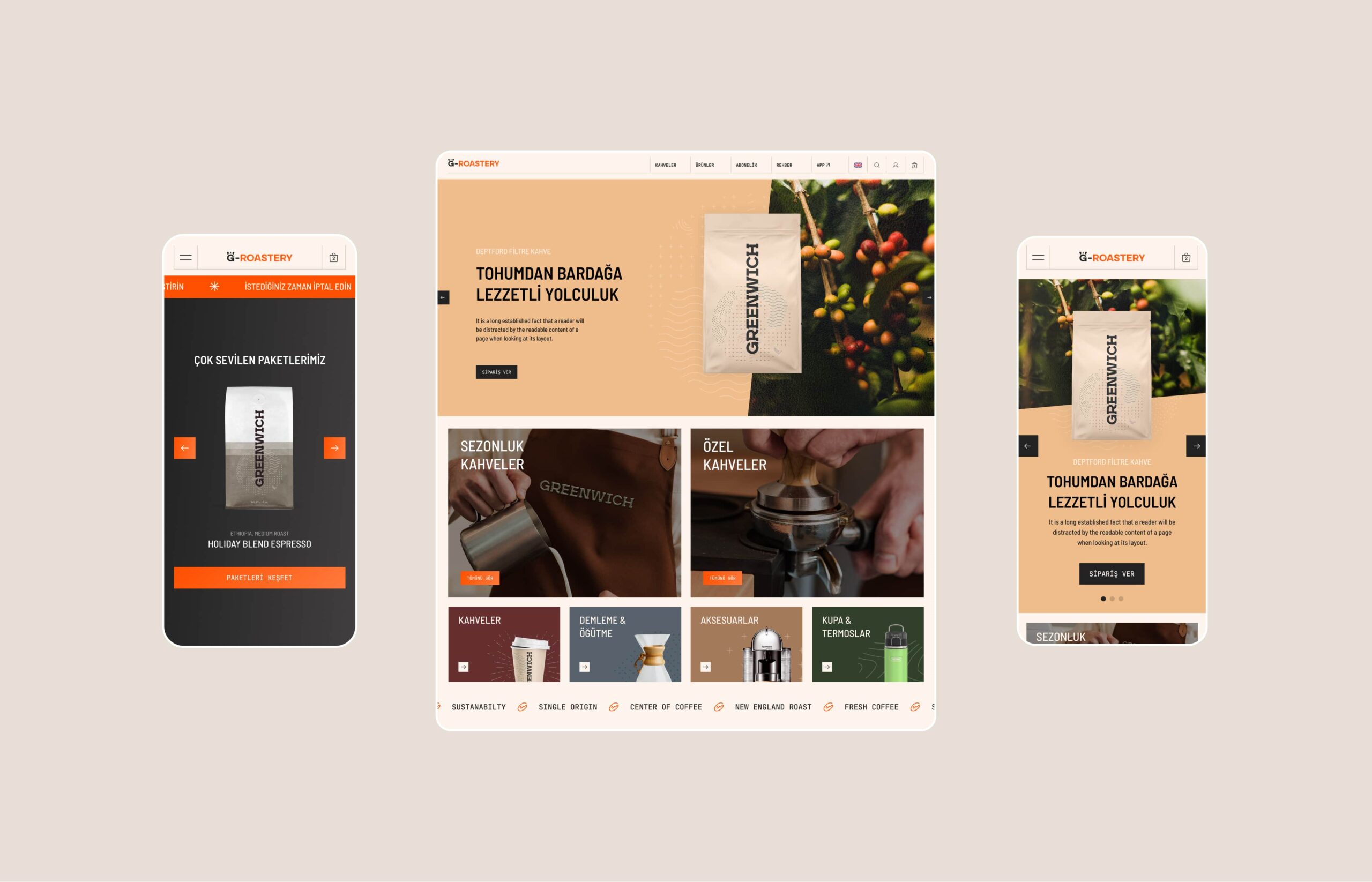
Greenwich Coffee
Mobile App Development, Front-End Development, Back-End Development
We build solutions for different teams and business needs.
Brands
We build branded apps that make your services and content easier to access.
Service Businesses
We develop user accounts, booking and service workflows based on your needs.
Startups
We help prioritize key use cases and plan an initial release.
Businesses
We build mobile tools connected to existing operational systems.
We focus on practical needs, user experience and long-term maintainability.
We design intuitive flows for mobile screens and everyday usage.
We select an approach that accounts for both platforms and product requirements.
We connect mobile apps to existing services and business systems.
We implement profiles, login and role-based experiences as required.
We test device scenarios and prepare App Store and Google Play submissions; approval is determined by each platform.
We plan fixes, updates and new features for apps we develop.
These are features mobile projects often need. We choose which ones belong in your app together, based on your goals, your users and your budget.
Registration, login, password reset and profile management, giving users a consistent experience through a personal account.
Order updates, appointment reminders or campaigns delivered in line with each user's notification preferences.
Integrations with payment providers so users can complete transactions without leaving the app.
Viewing availability, making a booking and changing it, reduced to a few taps.
Points, tiers and rewards that encourage users to keep coming back to the app.
Content and offers tailored to each user's preferences or past activity.
Past orders, bookings and transactions gathered on one screen, which also makes it easier for users to raise support requests.
Manage the app's content, users and transactions from a web-based panel, without releasing a new app version for content updates.
The feature set is defined per project; no app includes all of these by default.
We identify users, main flows, platforms and priorities.
We design screen flows and interactions for approval.
We implement the mobile experience and its service connections.
We verify core workflows and compatibility.
We prepare store submissions and plan maintenance.
Your website and mobile app can share the same infrastructure. This makes it easier to manage data from one place and offer a consistent experience on both channels.
The website and the app send and receive data through the same API, so business rules are defined in one place.
Product, content and user data are kept in one place, reducing the risk of the two channels showing different information.
Users can sign in to the website and the app with the same account and reach their information on both.
An order, booking or content update made on one channel shows up to date on the other.
Where suitable, your existing web infrastructure, CMS or ERP connections can also serve the mobile app.
Web and mobile are managed through a shared back end and admin panel, so maintenance and development move forward in one place.
This architecture isn't required for every project; whether it fits depends on your existing infrastructure and project goals.
We select technologies based on the actual requirements of each project.
We evaluate a shared codebase when suitable.
We connect apps to APIs and existing systems.
We scope the features that matter to your users.
We manage release preparation and testing.
Customer apps, operational tools and new mobile products require different priorities.
| Criteria | Customer App | Operations App | New Mobile Product |
|---|---|---|---|
| Primary goal | Customer engagement | Team workflows | New product experience |
| Users | Customers and members | Staff and field teams | Target audience |
| Example features | Membership and booking | Tasks and approvals | Product-specific flows |
| Integration | CRM and payments | ERP and operations | APIs and admin tools |
| Priority | Ease of use | Accurate and timely data | Validating core value |
| Approach | Branded mobile app | Workflow-specific app | Iterative product delivery |
Discovery, design, development, device testing and store submission. We plan each stage around your product.
Not always. React Native can support a shared codebase when suitable, while platform-specific requirements still need attention.
Screens, user roles, API connections, features, testing and release requirements determine scope.
Yes, if the existing system offers suitable APIs and permissions.
We can connect an existing panel or build one if the app needs content, user or transaction management.
We prepare submissions and release builds. Final approval depends on Apple and Google.
We review the codebase and technical requirements before deciding whether a takeover is appropriate.
Yes. We develop notifications, profiles and membership features according to the product's needs.
The timeline depends on design, features, integrations, testing and app store reviews.
Yes. We offer maintenance and technical support for apps developed by Basework.