
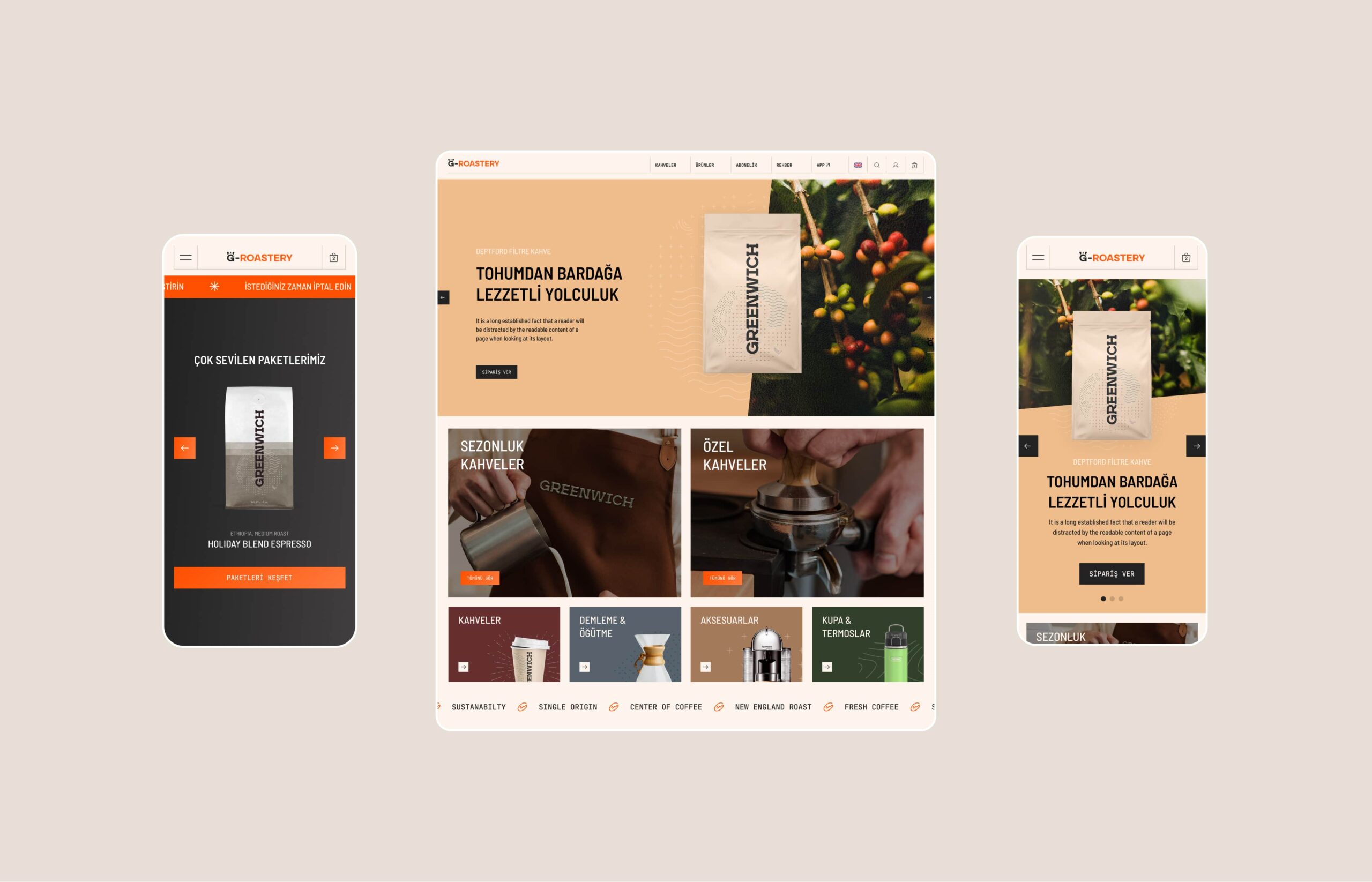
Greenwich Coffee
Mobile App Development, Front-End Development, Back-End Development
We build solutions for different teams and business needs.
Businesses
We build applications that bring manual tasks and disconnected processes into one manageable system.
Operations Teams
We create dashboards with the permissions, reporting and workflows your team needs.
Startups
We help define and develop an initial version with room for future improvements.
Agencies
We work alongside your team on custom applications, APIs and integrations.
We focus on practical needs, user experience and long-term maintainability.
We define the architecture around real workflows and future development needs.
We create interfaces tailored to user roles, operational tasks and reporting.
We connect systems using available APIs, with attention to data consistency and access control.
We turn complex workflows into interfaces that help people get work done.
Permissions, data handling, error management and performance are part of the development plan.
We prioritize readable code, testing and documentation to support future changes.
We build software shaped around how your business runs. The solutions below reflect the needs we see most often; the scope of each project is defined separately.
Role-based panels that let your team run day-to-day work from one place, replacing scattered spreadsheets and email threads with a traceable workflow.
Portals where customers or dealers track orders, documents and requests from their own accounts, cutting down on repetitive information requests.
Systems where you define membership, points, campaign and reward rules to fit your business, making customer relationships easier to measure and manage.
Booking flows that follow your capacity, calendar and approval rules, bringing structure to scheduling handled by phone and messages.
Connections that exchange data between your ERP, CRM and accounting systems, reducing the need to enter the same information in several places.
Reports and tools that bring data from different sources together in the views you need, so decisions rest on up-to-date information.
We clarify goals, users, existing systems and requirements.
We plan data flows, integrations and user screens for review.
We build the application and share progress in a test environment.
We verify user scenarios, permissions and integrations.
We plan deployment and agree on maintenance requirements.
We select technologies based on the actual requirements of each project.
We choose interface technologies based on product needs.
We implement application logic and data exchange.
We connect existing services where access and APIs allow.
We plan hosting, security and testing around the project.
We evaluate the problem before recommending an internal tool, customer platform or integration layer.
| Criteria | Internal Tools | Customer Platforms | API Integrations |
|---|---|---|---|
| Primary need | Operational workflows | Customer-facing services | Data exchange |
| Typical solution | Dashboard and approvals | Membership and self-service | ERP/CRM connections |
| Key priority | Roles and process tracking | Usability and performance | Reliable synchronization |
| Management | Team permissions | Users and content | API monitoring |
| Development | Custom web application | Web platform and services | APIs and connectors |
| Best suited for | Operations teams | Product and service businesses | Teams using multiple systems |
Examples of where custom software can make a difference. These scenarios describe common business needs, not specific client projects.
Example scenario
A team tracking orders, requests or field reports in spreadsheets and email could move to a single panel where every record lives in one place and each completed step is visible.
Example scenario
A business copying stock and order data by hand between its online store, ERP and accounting software could have that data synced through APIs at set intervals.
Example scenario
Where dealers send orders and document requests by phone, a portal could let each dealer act from their own account while head office follows every request in one panel.
Example scenario
Where an approved order has to be passed separately to warehouse, shipping and invoicing, status changes could be sent to each team automatically and delays reported.
The right solution depends on your existing systems, data structure and the way your team works, and is defined after a needs analysis.
Off-the-shelf tools can be a good choice when they meet your requirements. Custom development becomes useful when workflows, permissions or integrations demand a tailored approach.
User roles, screens, business rules, integrations, migration, security and testing all affect scope and cost. We prepare a proposal after discovery.
Yes, where the systems provide suitable APIs, permissions and data access. We assess feasibility before defining scope.
We begin by identifying the problem, users, critical workflows and priorities for the first release.
We plan for future changes where possible, while assessing each new feature against the existing architecture.
We first review the code, access, dependencies and technical debt to determine whether continuing development is practical.
The timeline depends on design, implementation, integrations and testing. We agree on milestones after defining the scope.
We assess permissions, access control, data handling and infrastructure requirements as part of the project.
We can develop a dashboard when the project requires content, users, reporting or operational management.
Yes. We offer maintenance and technical support for software developed by Basework, with requests tracked through Basework Hub.